


150A Range ACS758-KCB150B Hall Effect Linear Current Sensor
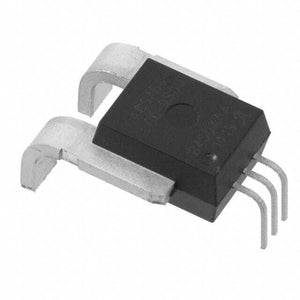
ACS758-KCB150B Hall-Effect-Based Linear Current Sensor IC provides economical and precise solutions for AC or DC current sensing. Hence Typical applications include motor control, load detection and management, power supply and DC-to-DC converter control, inverter control, and overcurrent fault detection
acs758-KCB150b
Download ACS758-KCB150b Datasheet
Product Attributes
|
TYPE |
DESCRIPTION |
SELECT |
|---|---|---|
|
Category |
||
|
Mfr |
||
|
Series |
||
|
Package |
Tube |
|
|
Product Status |
Active |
|
|
For Measuring |
AC/DC |
|
|
Sensor Type |
||
|
Current - Sensing |
||
|
Number of Channels |
1 |
|
|
Output |
Ratiometric, Voltage |
|
|
Sensitivity |
13.3mV/A |
|
|
Frequency |
DC ~ 120kHz |
|
|
Linearity |
±1% |
|
|
Accuracy |
±1.6% |
|
|
Voltage - Supply |
3V ~ 5.5V |
|
|
Response Time |
4µs |
|
|
Current - Supply (Max) |
13.5mA |
|
|
Operating Temperature |
-40°C ~ 125°C |
|
|
Polarization |
Bidirectional |
|
|
Mounting Type |
||
|
Package / Case |
||
|
Supplier Device Package |
5-CB Module |
|
|
Base Product Number |
Package Included for ACS758-KCB150B Hall-Effect-Based Linear Current Sensor:
1 x ACS758 150amp Current Sensor for Arduino
Tutorial
https://robojax.com/learn/arduino/?vid=robojax-allegro_ACS758%20_LCD1602_I2C_CP
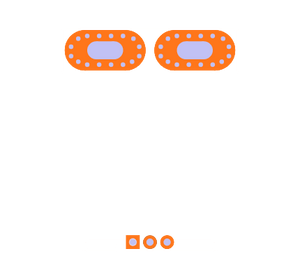
Product Foot Print for multiple PCB making software
Although the Allegro™ ACS758 family of current sensor ICs provides economical and precise solutions for AC or DC current sensing. Typical applications include motor control, load detection and management, power supply and DC-to-DC converter control, inverter control, and overcurrent fault detection.
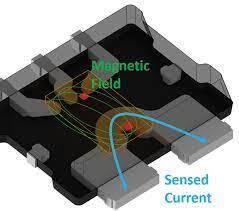
However the device consists of a precision, low-offset linear Hall circuit with a copper conduction path located near the die. Applied current flowing through this copper conduction path generates a magnetic field in which the Hall IC converts into a proportional voltage.
Device accuracy is optimized through the close proximity of the magnetic signal to the Hall transducer. A precise, proportional output voltage is provided by the low-offset, chopper-stabilized BiCMOS Hall IC, which is programmed for accuracy at the factory.
High-level immunity to current conductor dV/dt and stray electric fields, offered by Allegro proprietary integrated shield technology, provides low output voltage ripple and low offset drift in high-side, high voltage applications.
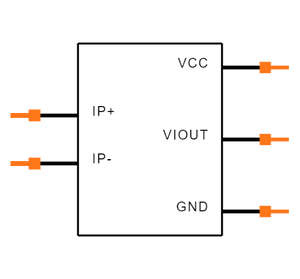
The output of the device has a positive slope (>VCC / 2) when an increasing current flows through the primary copper conduction path (from terminal 4 to terminal 5), which is the path used for current sampling. The internal resistance of this conductive path is 100 μΩ typical, providing low power loss.
The thickness of the copper conductor allows the survival of the device at high overcurrent conditions. The terminals of the conductive path are electrically isolated from the signal leads (pins 1 through 3). This allows the ACS758 family of sensor ICs to be used in applications requiring electrical isolation without the use of optoisolators or other costly isolation techniques.
The device is fully calibrated prior to shipment from the factory. The ACS758 family is lead (Pb) free. All leads are plated with 100% matte tin, and there is no Pb inside the package. The heavy gauge lead frame is made of oxygen-free copper.